I don't drink. Lemme take a gold bar instead.Boycott money. Let's all go back to a trading system.
Someone come clean my house in exchange for wine.

Install the app
How to install the app on iOS
Follow along with the video below to see how to install our site as a web app on your home screen.
Note: This feature may not be available in some browsers.
You are using an out of date browser. It may not display this or other websites correctly.
You should upgrade or use an alternative browser.
Yet another useful post
- Thread starter YourDailyDoseOf0rg-sm
- Start date
O, now I gotta find someone with a gold bar who wants wine first. Hold on. Bbs.I don't drink. Lemme take a gold bar instead.
O, now I gotta find someone with a gold bar who wants wine first. Hold on. Bbs.
YourDailyDoseOf0rg-sm
Active Member
1. I read the article. Again, this is another case of the gold standard coming to fruition. Gold standard used to be the "currency", and it works the same way as bitcoin: hard money. But again, that system failed, mainly because it was disrupting innovation. When the economy wanted to grow, it couldn't, because gold/money was limited. Here's an explanation of the pro-con of the gold standard. Some of the points do not apply to bitcoin anymore, but a lot still do.
2. Yes, that's how recession comes to be. If everyone saves, who will buy products and services? If companies don't earn a profit, they'll start cutting costs, cutting employees, or even closing down. Look into the deflationary spiral, it's a very real possibility.
I can't say much about bitcoin or cryptocurrency as an investment. Every investor had their own risk profiles. I for one, despite intrigued by how it works, would definitely not invest in bitcoin simply because it's still very young and unpredictable. I understand that it may be different for you.
The only issue I have is once Bitcoin enters economic territory. Bitcoin is in no way better than QE and NIR. It works as a temporary safe haven, at best (which again, is just replacing the role of gold assets). It's far too early to think about adopting it as a currency.
Could you elaborate on how bitcoin might disrupt innovation? Cuz from what I see bitcoin has actually lead to innovation at an unprecedented speed.
Anyway, when we are discussing about bitcoin being the primary medium of exchange and it's viability, we have to set up a premise that bitcoin is already the dominant medium of exchange. Now if bitcoin is already a medium of exchange, it means it is mass adopted, which kills the volatility in price as I explained before. With reduced volatility the deflationary pressure will be mild, which in my opinion wouldn't be an incentive good enough for u to wait for another year to buy your cosmetics, grocery, food, etc. Etc. The Overall spending might go down a bit but it won't necessarily lead to a deflationary spiral. In fact we have evidence to support this claim. In UK, over the period of 1983-2006, we had interest rates higher than inflation, this would mean that consumers are incentivize to save instead of spend as they would have greater purchasing power in the future, yet we did not see an economic meltdown during this time. What we actually saw during this period was a decrease in savings ratio of the average UK household, from around 15% of income to around 10%.
One theory suggests that consumers don't notice inflationary or deflationary pressures in small quantities and do not make economic decisions based on them. Another one says despite deflationary pressure there are some purchases that are necessary and can't be delayed. We could also argue that as deflationary pressure makes consumers feel wealthier they are more inclined to go out and spend this wealth.
Besides that one important aspect of bitcoin is that it will bring down the economic disparity. For this you have to understand the cantillon effect caused by the inflation in the fractional reserve banking which I hope you have looked up already. Bitcoin standard does quite the opposite, since the money supply is fixed, the gifts can't print More money and pass it on to the elite, thus eroding the wealth of poor and middle class with inflation. This is self explanatory if u understand the basic functioning of both thesystems
YourDailyDoseOf0rg-sm
Active Member
@Rynnethia another important issue I would like to move to here is how the cashless centralised economy is the next level surveillance capitalism and hence a threat to democracy
YourDailyDoseOf0rg-sm
Active Member
And I'm glad and thankful she did.I think Rynn is the only person that has ever offered this guy an actual discussion on BitCoin via forums
Okay, now this I agree with.@Rynnethia another important issue I would like to move to here is how the cashless centralised economy is the next level surveillance capitalism and hence a threat to democracy
 Dude, I'm sorry but do you have the links to the articles you read? I can't even find a past chart of inflation vs. interest rate for UK here.
This might be time where I shut up cause like I'm ashamed to admit that I don't fully understand what capitalism means. :[@Rynnethia another important issue I would like to move to here is how the cashless centralised economy is the next level surveillance capitalism and hence a threat to democracy
YourDailyDoseOf0rg-sm
Active Member
here's a chart
This might be time where I shut up cause like I'm ashamed to admit that I don't fully understand what capitalism means. :[
https://images.app.goo.gl/DwwuECAXBy8Sz1iWA
Also you start digging deeper when u don't understand things. When ppl become aware governments and central banks would lose their biggest leverage which allows them to control us. The generation before us passed on a broken world to our generation, it is upon us millenials to fix it and pass it on to next generation
1. Hindering InnovationCould you elaborate on how bitcoin might disrupt innovation? Cuz from what I see bitcoin has actually lead to innovation at an unprecedented speed.
Anyway, when we are discussing about bitcoin being the primary medium of exchange and it's viability, we have to set up a premise that bitcoin is already the dominant medium of exchange. Now if bitcoin is already a medium of exchange, it means it is mass adopted, which kills the volatility in price as I explained before. With reduced volatility the deflationary pressure will be mild, which in my opinion wouldn't be an incentive good enough for u to wait for another year to buy your cosmetics, grocery, food, etc. Etc. The Overall spending might go down a bit but it won't necessarily lead to a deflationary spiral. In fact we have evidence to support this claim. In UK, over the period of 1983-2006, we had interest rates higher than inflation, this would mean that consumers are incentivize to save instead of spend as they would have greater purchasing power in the future, yet we did not see an economic meltdown during this time. What we actually saw during this period was a decrease in savings ratio of the average UK household, from around 15% of income to around 10%.
One theory suggests that consumers don't notice inflationary or deflationary pressures in small quantities and do not make economic decisions based on them. Another one says despite deflationary pressure there are some purchases that are necessary and can't be delayed. We could also argue that as deflationary pressure makes consumers feel wealthier they are more inclined to go out and spend this wealth.
Besides that one important aspect of bitcoin is that it will bring down the economic disparity. For this you have to understand the cantillon effect caused by the inflation in the fractional reserve banking which I hope you have looked up already. Bitcoin standard does quite the opposite, since the money supply is fixed, the gifts can't print More money and pass it on to the elite, thus eroding the wealth of poor and middle class with inflation. This is self explanatory if u understand the basic functioning of both thesystems
Bitcoin is technically an innovation on its own, especially towards the fintech sector. What I meant by hindering innovation is the future of bitcoin, where bitcoin somehow becomes the new currency.
The logic is as follows: Let's say we've hit a bunch of halvings in Bitcoin. Now, Bitcoin mining is so slow that you might as well assumed that it's capped. Say in a certain time, the government has 100BTC. They spend it all on funding new innovation. Then, a new innovative product comes in, and the government wants to fund it, but now, they can't because they've run out of money.
Now you'd think other investors would like to invest in this innovation, which you're right, they do. But these investors also save a fraction of their capital just for deposit. Now your new innovation gets funded, which is great, but what if a new innovation comes in?
The same cycle repeats. Although the population increases, the transactions are limited because the BTC supply is capped. We can't support every innovation, we scrutinize each proposal and let the others wait for their turn. That's what is hindering innovation.
When you're trying to create a growing economy, a fixed hard currency will cause massive deflation, and again, high risk of recession.
Like I mentioned, bitcoin holds a lot of similarities to gold. If we went to bitcoin as currency, we'd more or less be going towards the gold standard again, whose issue is again, hindering innovation. Look into why the gold standard failed.
2. I'm not sure which article you read which stated those theories, but I can't accept that as "evidence" that deflation spiral will not happen. Agreed that UK did have a long period where interest > inflation, but this is because they were combating high inflation rates. Let me bring up the US, which had a similar history.
Look at the spike of inflation occuring around 1975 to 1980 in the UK, and the 1980s in US. Soon after, they started setting the interest rate high and inflation decreased. Here is the article for the UK, and here is the article for the US. So yes, the reason why there wasn't an economic meltdown due to excessive savings was because they were trying to make people save, to decrease inflation.
The savings ratio decreasing is quite bizarre. My gut says it's due to the decreasing interest rates, which they knew were definitely going to decrease, making people save less along the way, but again, I'm not sure because I can't tell for what period the savings decrease was for.
3. I agree with a lot of the theories raised. I'm not sure how deflationary pressure will make people feel richer, but the first two points are very true. I think the bigger issue lies with companies and bigger entities. Perhaps customers will be slightly incentivized to save and spend less, but in general deflation means less profit margin for the company. Keep spiraling down that hole of low profits and you get possible bankruptcy and unemployment.
I agree that it will reduce the economic disparity caused by the printing of money, but as it is, there's a major skew of wealth in terms of bitcoin. Participants who joined in early are advantaged. I believe a wealth disparity between these might occur.
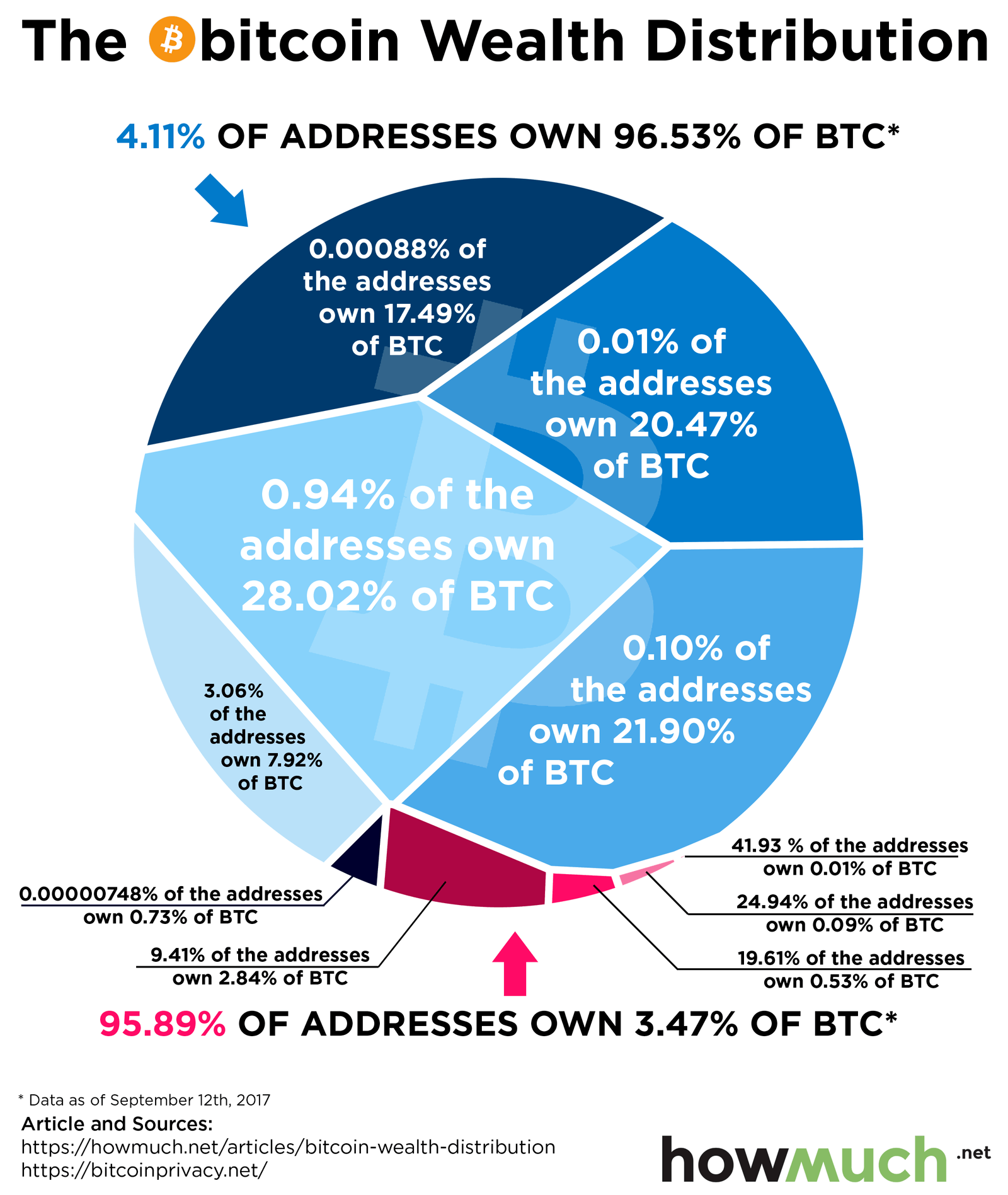
I mean, sure, it's an improvement. About 50% of the current wealth is held by the 1%. At least in BTC market, 96.53% is owned by 4.11%?
Unfortunately, this part is where you've lost me. When I googled surveillance capitalism, I understood it to be tech giants making use of personal data to manipulate the way you think, and even vote. Very dangerous, sure, but what does the cashless, centralised economy help boost this?@Rynnethia another important issue I would like to move to here is how the cashless centralised economy is the next level surveillance capitalism and hence a threat to democracy
WhoTfIsWesday
Well-Known Member
If there's no cash then every transaction is monitered/recorded. There's no privacy and all the money can allegedly disappear at the click of a button and/or be frozen. Current examples would be when a bank places limits on how much of your money you're allowed to spend in a day or freeze your account so that you can't withdraw or buy things which can be bypassed if you have cash but otherwise you're screwed.Unfortunately, this part is where you've lost me. When I googled surveillance capitalism, I understood it to be tech giants making use of personal data to manipulate the way you think, and even vote. Very dangerous, sure, but what does the cashless, centralised economy help boost this?
Yes, I understand the implications of a cashless society, and this just plays onto the debate of how much control do we get tech, but how does going cashless screw over democracy? Sure, your every action and information could be monitored, but that's it. It doesn't imply that you will be controlled using those data.If there's no cash then every transaction is monitered/recorded. There's no privacy and all the money can allegedly disappear at the click of a button and/or be frozen. Current examples would be when a bank places limits on how much of your money you're allowed to spend in a day or freeze your account so that you can't withdraw or buy things which can be bypassed if you have cash but otherwise you're screwed.
YourDailyDoseOf0rg-sm
Active Member
1. Hindering Innovation
Bitcoin is technically an innovation on its own, especially towards the fintech sector. What I meant by hindering innovation is the future of bitcoin, where bitcoin somehow becomes the new currency.
The logic is as follows: Let's say we've hit a bunch of halvings in Bitcoin. Now, Bitcoin mining is so slow that you might as well assumed that it's capped. Say in a certain time, the government has 100BTC. They spend it all on funding new innovation. Then, a new innovative product comes in, and the government wants to fund it, but now, they can't because they've run out of money.
If bitcoin becomes the dominant medium of exchange , it doesn't mean the Governments will go broke, what it means is that they will no longer be able to issue debts (currencies) out of thin air, out of which, only 10-20% reaches the general masses.
Now you'd think other investors would like to invest in this innovation, which you're right, they do. But these investors also save a fraction of their capital just for deposit. Now your new innovation gets funded, which is great, but what if a new innovation comes in?
The same cycle repeats. Although the population increases, the transactions are limited because the BTC supply is capped. We can't support every innovation, we scrutinize each proposal and let the others wait for their turn. That's what is hindering innovation.
When you're trying to create a growing economy, a fixed hard currency will cause massive deflation, and again, high risk of recession.
Like I mentioned, bitcoin holds a lot of similarities to gold. If we went to bitcoin as currency, we'd more or less be going towards the gold standard again, whose issue is again, hindering innovation. Look into why the gold standard failed.
Not sure what you mean by transactions are limited but what you gotta understand here is that bitcoin is infinitely divisible (one of the many advantages bitcoin has over gold), which means even if it's price goes to millions per coin u can still pay for a coffee with bitcoin.
Moreover, the point that we will run out of investors is not true. In the current scenario, only the wealthy fund new innovations cuz there is no platform for the average joe to make investments in new projects. But with blockchain that has changed. Most of the projects have raised capital by means of crowd funding where the entire population gets involved. Also, I would like to point out that bitcoin transcends borders, so a person sitting in India can invest in a project in the U.S which, again, was a privilege only rich enjoyed so far. (This point will also be used when i discuss economic disparity later)
What you're ignoring here is that gold isn't deflationary, The supply of gold is constantly increasing with supply shocks now and then when the amount of gold mined in a particular period spikes. This also brings in the uncertainty in the inflation rate of gold over time as we don't know the max supply of gold. On the contrary, bitcoin supply is scheduled to stop in 2140. Like i mentioned in my previous comment, this will lead to a mild deflation over time which people tend to ignore when making their spending choices. I am afraid I do not agree with the statement that bitcoin would hinder innovation.
2. I'm not sure which article you read which stated those theories, but I can't accept that as "evidence" that deflation spiral will not happen. Agreed that UK did have a long period where interest > inflation, but this is because they were combating high inflation rates. Let me bring up the US, which had a similar history.

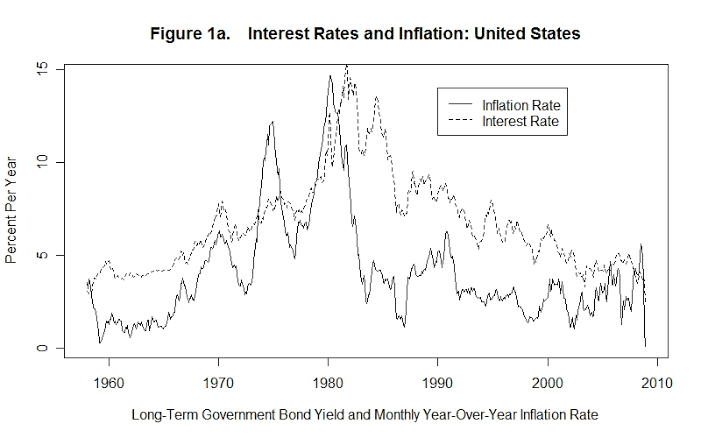
Look at the spike of inflation occuring around 1975 to 1980 in the UK, and the 1980s in US. Soon after, they started setting the interest rate high and inflation decreased. Here is the article for the UK, and here is the article for the US. So yes, the reason why there wasn't an economic meltdown due to excessive savings was because they were trying to make people save, to decrease inflation.
The savings ratio decreasing is quite bizarre. My gut says it's due to the decreasing interest rates, which they knew were definitely going to decrease, making people save less along the way, but again, I'm not sure because I can't tell for what period the savings decrease was for.
You're saying that they were trying to make people save but what I am saying is that the spending didn't go down lol. It actually went up, which you can verify here:
https://tradingeconomics.com/united-kingdom/consumer-spending
So my point, that the premise that people will spend less in a deflationary economy which will lead to a spiral deflationary cycle isn't a valid argument, stands.
I agree with you that economic slowdowns will happen, but if you let the free market control the economy then the slowdowns will provide opportunities for new businesses, more growth, as these are part of the economic cycles. But there's a difference between a cyclical slow downs and burst of artificial bubbles created by the governments to favour the rich. Slowdowns are healthy, but the ones like GFC aren't.
3. I agree with a lot of the theories raised. I'm not sure how deflationary pressure will make people feel richer, but the first two points are very true. I think the bigger issue lies with companies and bigger entities. Perhaps customers will be slightly incentivized to save and spend less, but in general deflation means less profit margin for the company. Keep spiraling down that hole of low profits and you get possible bankruptcy and unemployment.
I agree that it will reduce the economic disparity caused by the printing of money, but as it is, there's a major skew of wealth in terms of bitcoin. Participants who joined in early are advantaged. I believe a wealth disparity between these might occur.

I mean, sure, it's an improvement. About 50% of the current wealth is held by the 1%. At least in BTC market, 96.53% is owned by 4.11%?
I am gonna completely ignore the above pie chart as this doesn't account for more than 3 million bitcoins held by these big wallets that are lost forever. Add to that, bitcoin is still an tradeable asset and not a currency. add to that around 1m coins that are held by exchanges and belong to ppl and not a single entity
I also agree that the early adopters are benefited, Well, they took the risk when most weren't willing to so they deserve to be rewarded. But yeah you agree that it can narrow down economic disparity and that is my point. You might wanna read this article though.:
https://medium.com/predict/how-bitcoin-solves-the-problem-of-the-worlds-unbanked-poor-ad2f76d7e368
Unfortunately, this part is where you've lost me. When I googled surveillance capitalism, I understood it to be tech giants making use of personal data to manipulate the way you think, and even vote. Very dangerous, sure, but what does the cashless, centralised economy help boost this?
i will adress this in your reply to wednesday below
p.s I'm not saying bitcoin can't be replaced by some other tech, or a better tech but I'm inclined towards bitcoin mainly cuz of the security of the network, deflationary model and decentralisation
YourDailyDoseOf0rg-sm
Active Member
Yes, I understand the implications of a cashless society, and this just plays onto the debate of how much control do we get tech, but how does going cashless screw over democracy? Sure, your every action and information could be monitored, but that's it. It doesn't imply that you will be controlled using those data.
To add to what Wednesday said, the government would know where your money is going. They can confiscate all your wealth with the click of a button and you will have no cash to sustain. Ofc there are courts where u can fight the govt if the account is frozen on unjustified grounds, but how would u pay the lawyers?
Let's take an example of a cashless economy where your current govt is good and all for democracy etc etc and the opposition has a authoritarian leader. Come election people vote the government out of power. Assume you're a journalist and you raise a voice against govt policy, the govt doesn't like it and freezes your account. What would u do now? With cashless economy one bad election can kill democracy.
p.s these type of incidents are already happening around the world. Ppl are being cut off from Banking services.
WhoTfIsWesday
Well-Known Member
Ig it's just the fact that they could that threatens it? Governments have never chosen to not be corrupt when given lots of power. People always like to whine about how communism fails because the government has complete control over money and who gets it so it would essentially be thatYes, I understand the implications of a cashless society, and this just plays onto the debate of how much control do we get tech, but how does going cashless screw over democracy? Sure, your every action and information could be monitored, but that's it. It doesn't imply that you will be controlled using those data.
 I sorri, i not as smart and technical as you and op
YourDailyDoseOf0rg-sm
Active Member
Ig it's just the fact that they could that threatens it? Governments have never chosen to not be corrupt when given lots of power. People always like to whine about how communism fails because the government has complete control over money and who gets it so it would essentially be that
Be it communism or capitalism, the control over money and monetary policies is centralised and concentrated with either government or privatised central banks. China is coming with digital yuan. Most countries have rolled out plans for their digital currency. This will be it
YourDailyDoseOf0rg-sm
Active Member
Bumped for hoax
ForeveR-DanK
Well-Known Member
TL; DR
P. S. - /tarot
YourDailyDoseOf0rg-sm
Active Member
this kind of financial illiteracy is what leads to voluntary enslavementTL; DR
P. S. - /tarot
ForeveR-DanK
Well-Known Member
"Voluntary enslavement" keeps people from starting uninteresting threads on a day to day basis.this kind of financial illiteracy is what leads to voluntary enslavement